#40 best seller · Ground Spices · Laljee Godhoo (LG)
Asafoetida (Hing) Powder
Smells like nothing you'd want near food, tastes like nothing works without it.
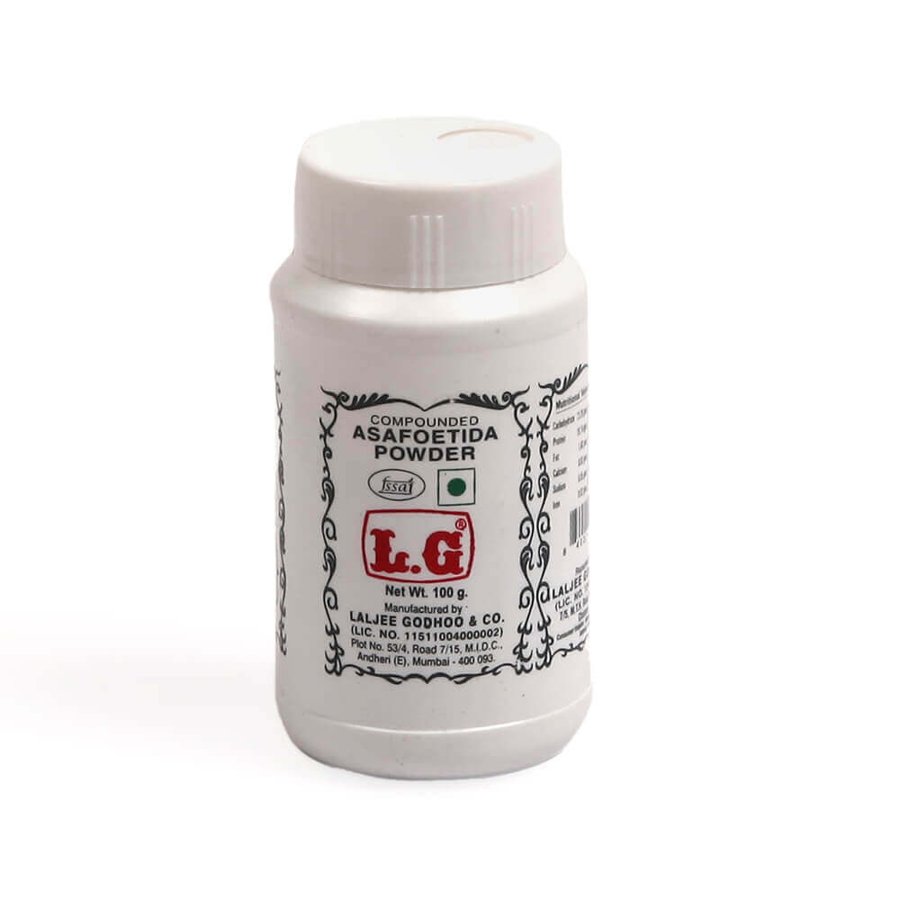
Hing is the spice with the worst reputation and the biggest job. Straight from the jar it smells sharp and slightly sulfurous — but the moment a pinch hits hot oil, it mellows into something savory and almost garlicky, which is exactly why Jain and onion-garlic-free households rely on it so heavily.
It's used in tiny quantities, but it's in almost every tadka for dal, sambar, and many vegetable dishes across India, and it doubles as a digestive aid, which is why it earns a permanent spot near the front of the spice shelf rather than buried in the back.
Why it's used in dals specifically
A pinch of hing in the tadka for toor dal or moong dal is widely believed to reduce the bloating that lentils can cause, which is part of why it's added almost automatically in most households.
It also adds a savory, umami-like depth that partially substitutes for onion and garlic flavor, which is essential in Jain cooking where both are avoided.
How much to use, and how
A tiny pinch — literally a few grains — is enough for a pot of dal. Too much and the sulfurous smell dominates instead of mellowing into the dish.
Always add it to hot oil or ghee, never directly onto food, since heat is what transforms its raw pungency into a savory background note.
Compounded vs pure hing
Most hing sold for home cooking is 'compounded' — mixed with rice flour or wheat flour as a carrier, since pure resin asafoetida is extremely potent and hard to dose accurately.
Check the label if you need a gluten-free version, since some compounded hing uses wheat flour as filler.
Ravi's quick tips
- •Use a pinch at a time — hing is one of the few spices where more is reliably worse.
- •Always bloom it in hot oil or ghee before adding other ingredients.
- •Check the label for gluten-free hing if needed, since some brands use wheat flour as a carrier.
- •Store tightly sealed; an open jar can perfume everything nearby in the pantry.
Frequently asked
Why does hing smell so strong on its own?
In its raw form, hing has a sharp, sulfurous smell that mellows dramatically into a savory, almost garlicky note once cooked in hot oil.
Is hing gluten-free?
Not always — many compounded hing powders use wheat flour as a carrier. Check the label carefully if you need gluten-free.
Why do Jain recipes use so much hing?
Since Jain cooking avoids onion and garlic, hing is used to add a similar savory depth to dals and vegetable dishes.
Will Fox Valley Bazaar stock hing at launch?
Yes, asafoetida is part of our core ground spices lineup planned for the Appleton store.
More best sellers
What do you struggle to find?
Tell us the product, brand, or ingredient you wish Fox Valley Bazaar carried. If we stock it, we’ll let you know.
Want this on a shelf in Appleton?
Fox Valley Bazaar is being built on real demand from real neighbours. Join the interest list and tell us what to stock first.
Join the Interest List